Neuroscience research shows how the response to trauma affects brain development and why it is urgent to ensure that the traumatic state does not persist over time.
The PLAY AWAY projects aim to provide an experience of emotional attachment.
1 - Play Away Days - objectives
• A gradual process of opening up, starting from a state of withdrawal and anxiety. The one-day duration ensures a gradual recovery from the trauma.
• An openness towards others ; a sense of loneliness fading away.
A variety of interactions helps to restart the ‘social engagement system’ that has been damaged by traumatic reactions.
• No longer feeling alone : realising that one shares common experiences and struggles that are not unique to oneself (survivor’s guilt, feelings of inadequacy).
• Start savouring and experiencing the joy of feeling pleasure and allowing yourself to feel.
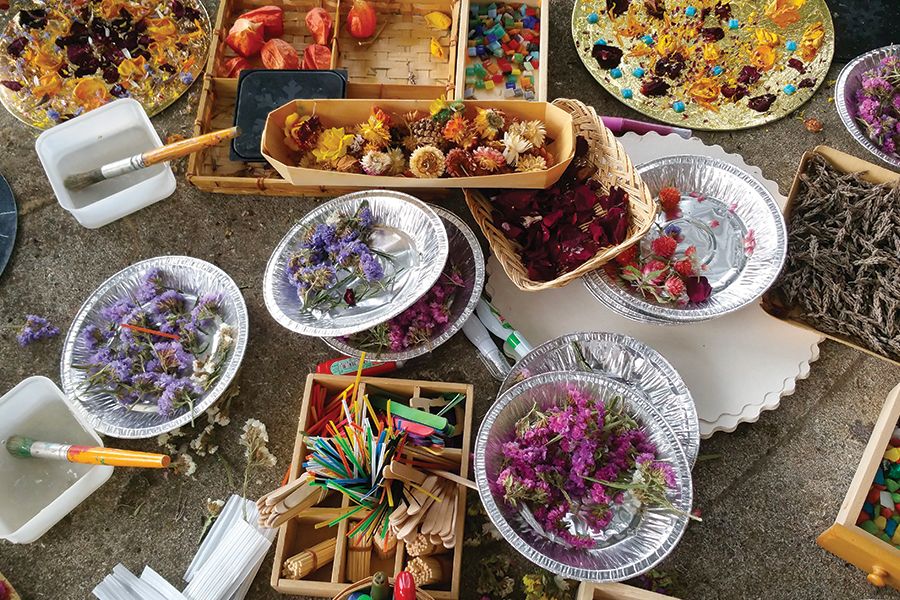
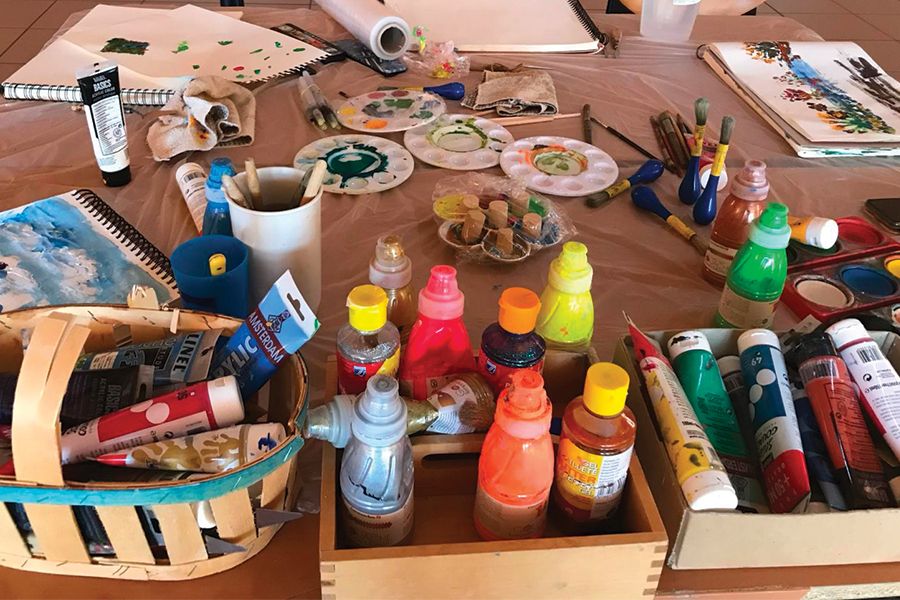
• May each participant experience pleasant sensations and a sense of calm through a range of creative media.
To enjoy this alone and with others, whilst at the same time gaining confidence and opening up to the world.
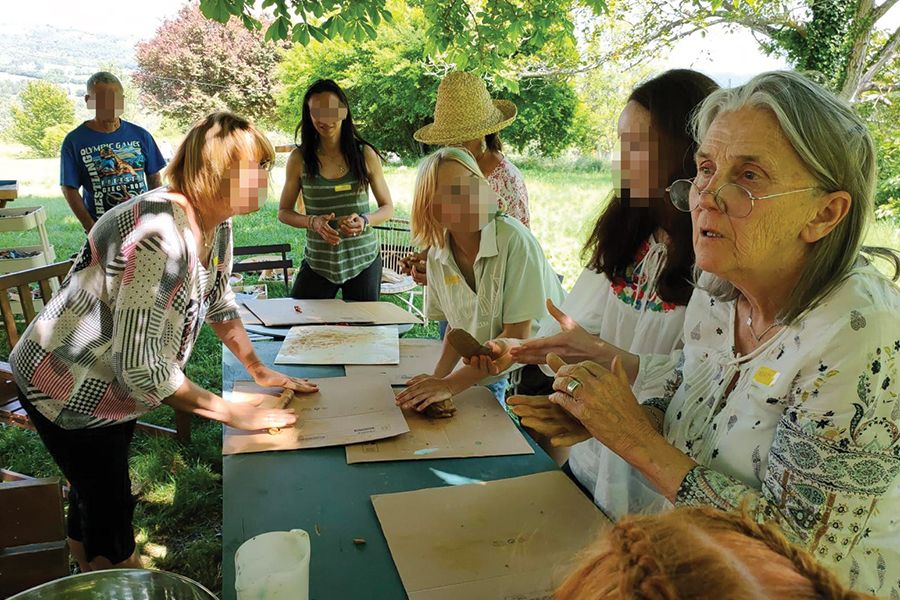
• To realise that there is still vitality and liveliness within oneself, and to take pleasure in watching and joining in with children as they express themselves through clay, paint, water …
These groups, which encourage creative expression through various media and movements, are not restricted to participants from a single ethnic or linguistic background. Participants from a variety of backgrounds are welcome to take part...
fully, even without a common language for everyone. The Creative Sketchbook, available in the documents, provides all the necessary information.
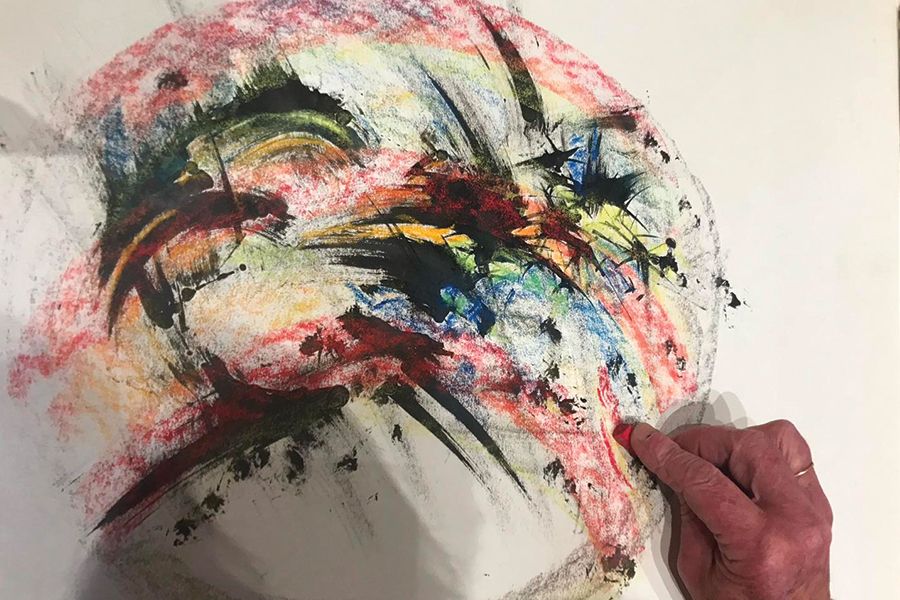
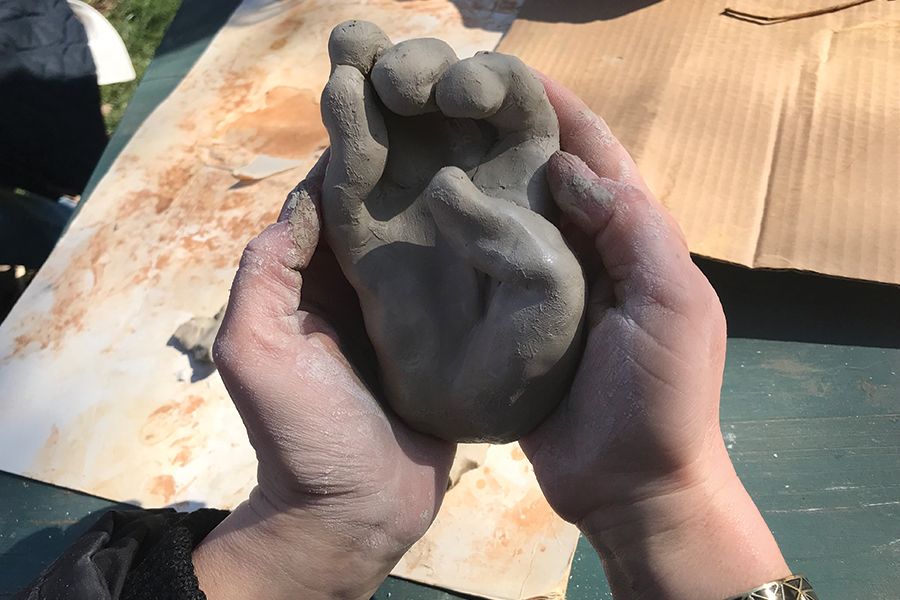
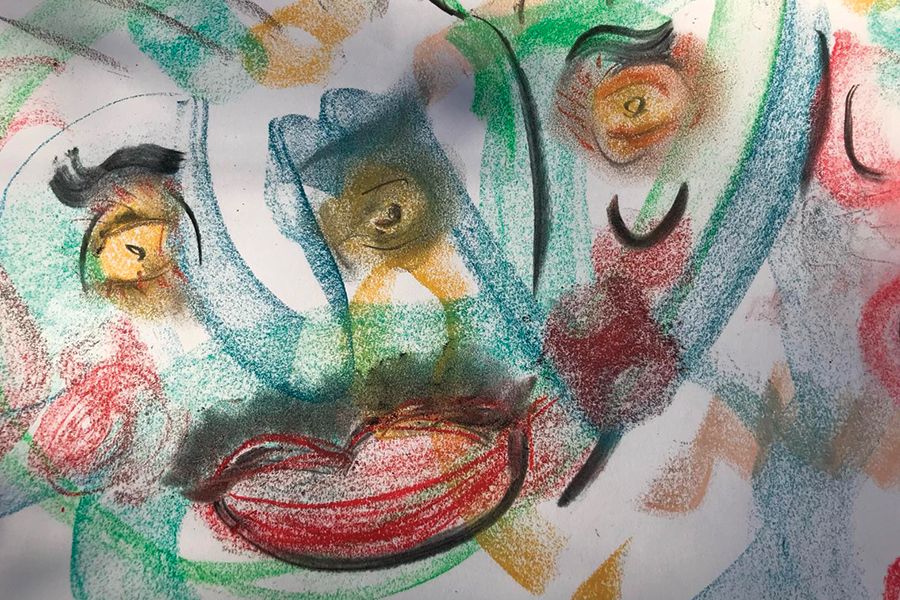
Creative expression using various media such as paint, pastels and clay, as well as physical expression through movement and gestures, enriches both verbal and non-verbal communication.
These creative groups are also aimed at specific sections of the population (e.g. teenagers, older people) and specific situations (e.g. bereavement, anxiety related to COVID-19 and climate change).
All these groups share a set of common principles designed, in particular, to ensure a solid framework, collaboration between the two coordinators and mutual respect amongst the participants.
There are two or three optional sections within the structure of the weekly or monthly sessions, which last 1½ or 2 hours.
There are more than 50 creative ideas available in the documents, as well as the Creative Groups Sketchbook.
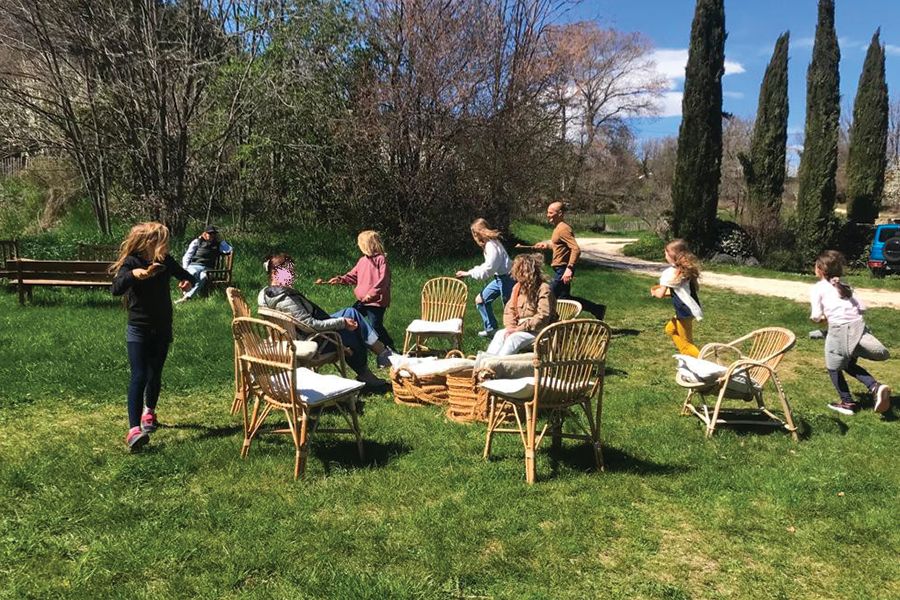
3 - Outdoor play areas
If the concept of outdoor play areas is introduced into villages and urban play spaces, a new category of professionals will be needed.
PLAY FACILITATORS are responsible for safety and running activities...
in these spaces where children can be left by their parents for long periods under specific conditions.
Trained facilitators can become coordinators for other PLAY AWAY projects.
The training of playing facilitators involves a rigorous recruitment process, which sometimes requires candidates to work through some of their own traumas before or during an initial trial period in order to be accepted as members of the project.
These suggestions highlight the need to train trainers of trainers in order to set up spaces for creativity and play.
The outline of this training programme is available on request (see DOCUMENTS).
A PLAY AREA PROJECT must be incorporated into local planning and architectural reconstruction (for example, following a period of war), underpinned by an official policy recognising the social and psychological benefits of play for children.
If you would like further information on this subject, please contact us using the online form on this website.
4 - The DROP-IN workshop
This project idea for ADULTS is a place where anyone can go at (almost) any time.
This offers greater opportunities to the most vulnerable, and perhaps to those who are most anxious...
who do not have a regular routine or a specific time of day when they know they will feel well enough to (or need to) go to this ‘safe’ place: a space where they can simply be and create without any pressure.
The key principles of such an ATELIER :
- Drop in whenever you like and for as long as you like (up to 2 or 3 hours, for example)
- You are under no obligation to speak to the ‘caretaker’, who is there to ensure safety and explain the possible uses of the creative materials found on the tables all around (e.g. paint, pastels, clay, charcoal, puppet-making, building).
If you would like further information on this subject, please contact us by completing the online form on this website.
5 - PLAY AWAY buses
These buses are equipped with creative resources, toys and videos for parents and small learning groups. They can be used :
- as mobile practical workshops for individual therapy for children...
- those who have suffered the most trauma and who have no other options in their local area,
6 - Play Away Days training
This programme is aimed at local volunteers who wish to become members of a core team for the PLAY AWAY DAYS project or the other projects mentioned. These training programmes offer...
- in a fun and creative way – the PRINCIPLES of CREATIVE ETHIC and the ORGANISATIONAL STRUCTURES of these projects.
They also explore and explain the essential needs and experiences of traumatised participants.
That is why their involvement in such a team, particularly in conflict zones and disaster situations, can :
- It has the potential to be extremely valuable and helpful in providing personal relief for facilitators and members of the professional team following a traumatic event or period of distress.
- require prior training, followed by supervision or some form of support.
Training MODULES are available for PROJECTS 1 & 2, PLAY DAYS and CREATIVE GROUPS. They are based on two SKETCHBOOKS, accompanied by additional teaching materials, reference resources, a set of personal processes and a choice of specialisations.
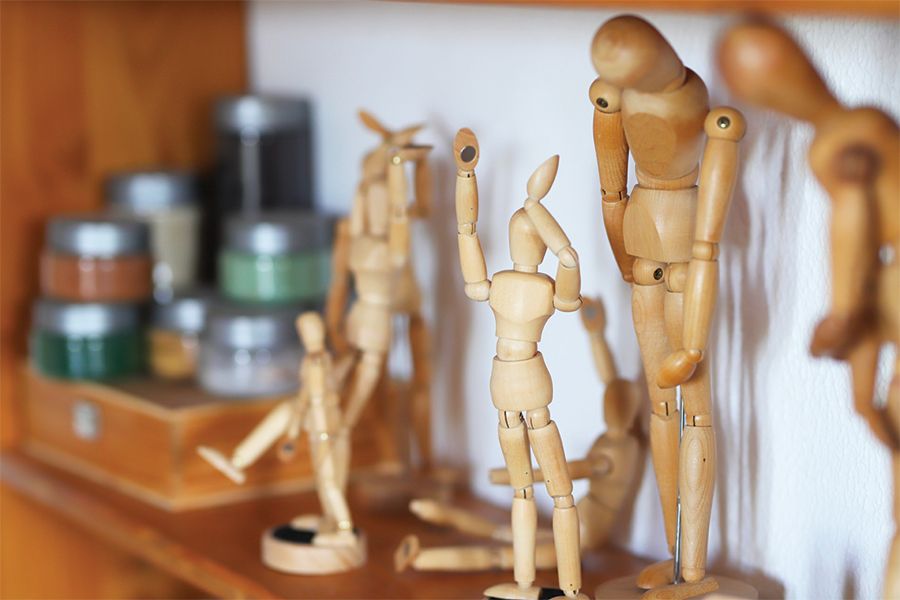
Creative pedagogy is simple and clear, using gestures and sketches to explain key concepts such as attachment and trauma.
7 - ACCREDITATION training
This training programme is aimed at therapists, psychologists and child psychiatrists. The two-year accreditation course in the Creative Existential Therapy is currently offered in France and Belgium...
by qualified professionals, trained by Verity J Gavin from 2005 to the present day.
This new approach to teaching was developed during the Covid pandemic to ensure that experiential and creative pedagogy were maintained.
In some cases, it is possible to put together a fast-track course and share training materials.
Please feel free to ask for further information by contacting Verity J Gavin about this via the online contact form on this website.
Distribution of charters, texts, videos and letters containing advice, addressed to :
- children, teenagers, traumatised mothers and grandparents – foster families – volunteers. The original text...
in English or French, can be translated in other languages, with colourful illustrations or explanatory sketches.